
 FR
FR  ES
ES  DE
DE  IT
IT 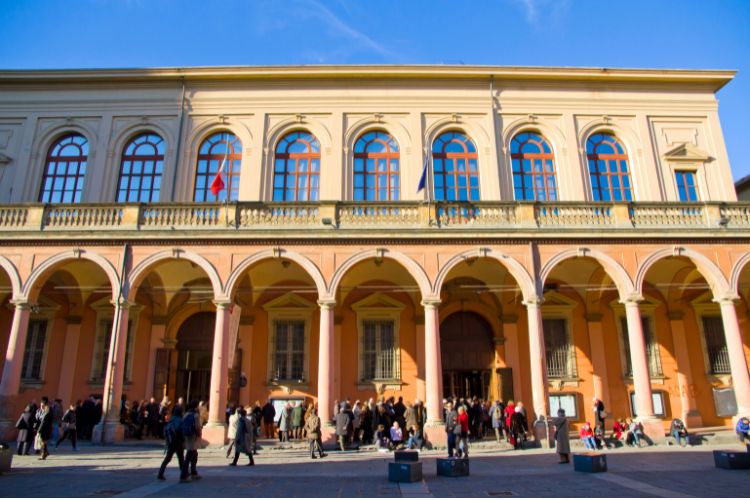
Bologna is known as "La Dotta" (The Learned One), and there's a reason for that. It's home to the oldest university in the Western world, founded way back in 1088. Imagine, almost a thousand years of academic history that you can still feel today as you wander through the city centre.
It's not just about old buildings, but a unique atmosphere that links the city to its university. Many areas, especially around Via Zamboni, are buzzing with student life, with bars, libraries, and the various faculty buildings.
Visiting the University of Bologna means diving into the history of knowledge, discovering places that have seen generations of scholars pass through. It's an experience that makes you feel part of something grand and ancient. Seeing where people studied, debated, and held the first anatomy lectures gives you a different perspective on the city and culture in general. It's a way to truly understand why Bologna is so special.
What to See During Your Visit
Palazzo dell'Archiginnasio
This imposing building, once the main seat of the University, is a true architectural gem. Walking through its courtyards and admiring the coats of arms of the students who once studied there will transport you back in time. It's a place that breathes academic history at every corner.
Anatomical Theatre
Inside the Archiginnasio is this extraordinary anatomical theatre. Imagine students and professors gathered here centuries ago to study human anatomy. Its wooden structure is incredibly well-preserved and offers a unique glimpse into past teaching methods.
Archiginnasio Library
Next to the Anatomical Theatre, the library is another treasure to discover. Its halls are filled with ancient books and manuscripts, testaments to centuries of knowledge. It's a place where silence speaks and invites reflection on the vastness of accumulated knowledge.
Palazzo Poggi Courtyard
Palazzo Poggi is another historic building of great importance. Its courtyard, with its decorations and tranquil atmosphere, is a pleasant place to linger. Here, you can feel an air of study and research that continues to this day.
Palazzo Poggi Museum
Within the same palace, the museum houses scientific collections that tell the story of research and teaching in Bologna. You can see ancient instruments and artefacts illustrating the evolution of science over the centuries. It's a fascinating immersion into the world of science and its historical teaching.
How to Organise Your Visit
Planning your visit to the University of Bologna is quite straightforward, but there are a few things to keep in mind to make the most of your time. First and foremost, always check the updated opening hours and days, as they can vary depending on the time of year or special events. Many of the historic sites and museums are free to enter, but some specific areas or guided tours may require a ticket. Finding out about costs and how to purchase tickets in advance will save you any surprises at the entrance. Speaking of guided tours, they are an excellent option for discovering the historical and architectural details of the various buildings. They are often organised by expert guides who can enrich the experience with anecdotes and interesting facts. Keep in mind that some tours, such as those including the archaeological area, may require booking, especially at weekends. For more precise information on available options, you could consult the official websites or contact the city's tourist information offices. Organising in advance will allow you to fully enjoy the historical and cultural richness of the University. Remember that the university is a living institution, so some spaces may only be accessible at certain times or on special occasions, such as open days. If you are interested in specific thematic routes, such as those related to the history of medicine or law, check if there are dedicated tours that might interest you. The University Library of Bologna, for example, can be visited during special guided tours that offer a unique insight into its historical collection.
Useful Tips for Your Visit
When planning your visit to the University of Bologna, keep in mind that many of the historic buildings and libraries have specific opening hours, so it's always a good idea to check the official website in advance. Don't assume everything is open all day. If you are particularly interested in the history of the University, look for dedicated guided tours; they often offer perspectives you might miss on your own. These guides can truly bring the places to life, explaining the significance behind each room or artefact. Regarding tickets, most of the main attractions, such as the Anatomical Theatre or the Palazzo Poggi Museum, require a ticket, but the costs are generally reasonable, and there are often packages that include multiple sites. If you are travelling with a group, inquire about any discounts or specific booking procedures. Also, remember that walking is the best way to explore the historic centre, so wear comfortable shoes. You might want to bring a small water bottle, especially during the warmer months, although you will find fountains around the city.
Frequently Asked Questions
Why is the University of Bologna so special?
The University of Bologna is very famous because it is the oldest in Europe, open for almost a thousand years! It's a place full of history and culture, where the connection between the city and its students can still be felt today.
What are the most important places to see related to the university?
There are many fascinating places! The Palazzo dell'Archiginnasio with its courtyard full of coats of arms, the Anatomical Theatre where medicine was studied, the Archiginnasio Library, and Palazzo Poggi with its museum and beautiful courtyard are unmissable stops.
Where are these places located?
Most of these historic buildings are located in the heart of Bologna, especially in the university district that develops around Via Zamboni. It's easy to walk around and discover them one after another.
Can these places be visited even if you are not a student?
Absolutely yes! Many of the university buildings, such as the Palazzo dell'Archiginnasio, are open to the public. Sometimes there are also special guided tours to discover the history in more detail.
How long does it take to visit the university sites?
It depends on how much you want to delve into! A general walk can take a few hours, but if you want to visit the museums and enjoy every detail, you could dedicate a whole day.
Are there costs to visit these places?
Some places like the Palazzo dell'Archiginnasio and the Anatomical Theatre may have a small entrance fee, while other university spaces are freely accessible. It's always best to check the official websites for the most up-to-date information on costs and opening hours.