
 FR
FR  ES
ES  DE
DE  IT
IT 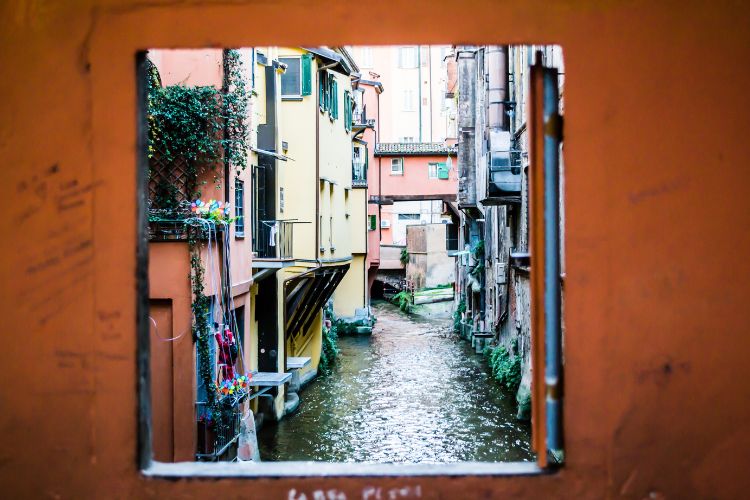
Bologna, often known for its towers and porticoes, hides a lesser-known face, once vital to its existence. Wandering through its streets, one might stumble upon a small opening offering an unexpected view: the Little Window of Via Piella. This is no ordinary window; it's a doorway to an almost forgotten past, an era when water flowed freely beneath the city, shaping its economic and social life. It is one of Bologna's so-called Seven Secrets, a detail that, if not sought out, might escape the casual passer-by's eye. But once discovered, it reveals a unique perspective on what Bologna was like in its heyday, a city deeply connected to its waterways.
The Little Window of Via Piella: A Journey Through Time
The Little Window of Via Piella, with its modest appearance, is in reality a portal to another temporal dimension. Opening a glimpse onto one of the few still visible stretches of the Canale delle Moline, it transports us back in time. Imagine medieval Bologna, buzzing with activity, where these canals were not just waterways but vital arteries. They were used for transporting goods, powered the mills that ground grain, and provided energy for artisan workshops. The view from the little window, with the water flowing placidly between the red bricks of the buildings, is a tangible reminder of this watery heritage, a heritage that significantly contributed to the city's development and prosperity. It's a small glimpse, but rich with history.
The Canale delle Moline: Witness to an Ancient Water Network
The Canale delle Moline, visible through the Little Window of Via Piella, is much more than a simple waterway. It is a silent witness to an extensive water network that once crisscrossed Bologna. Diverted from the Reno River, this canal, along with others, formed a complex system that made Bologna a cutting-edge city for its time. Its importance was such that it powered as many as fifteen mills, essential for the production of goods and the city's economy. Today, much of this network has been covered or diverted, but the Canale delle Moline, thanks to glimpses like the one offered by the Little Window, continues to tell the story of a Bologna that knew how to harness the power of water, a Bologna on the water that deserves to be rediscovered.
The History and Importance of Bologna's Canals
Medieval Bologna: A City on the Water
In the Middle Ages, Bologna was a very different city from the one we know today. It was crisscrossed by a dense network of canals, mainly diverted from the Reno River. These waterways were not just communication routes but true engines of the city's economy. The presence of these canals shaped Bologna's life and development for centuries, making it a vital hub for trade and craftsmanship. Consider that the city, lacking direct access to the sea, depended heavily on these waterways for its commercial exchanges.
Canals as an Economic and Social Engine
The Canale delle Moline, for example, was fundamental because it powered as many as fifteen watermills. These mills were used to grind grain and to operate manufactories, particularly those related to silk production, a very important activity at the time. The canal water was therefore a precious resource, providing the necessary energy for productive activities. In addition to the economic aspect, the canals also had a social role: they were meeting places where washerwomen gathered for their daily work, an image we can almost imagine today when looking at the Little Window.
From Waterways to the Modern City
As time passed and urban development progressed, much of this water network was buried or hidden. Roads expanded, houses grew, and the canals became increasingly less visible, almost forgotten. The Little Window of Via Piella represents one of the few points where it is still possible to glimpse this aquatic past. It is a silent testament to an era when water flowed in the open air, profoundly influencing the city's life. Today, these remnants remind us of the ingenuity of our ancestors and the importance of preserving the traces of our history.
The Magic of the Little Window of Via Piella
A Look at an Unusual Bologna
There is a corner of Bologna that, if you just stop for a moment, can make you feel as if you've taken a leap back in time, or perhaps to another city. I'm talking about the Little Window of Via Piella. It's not an imposing monument, nor a crowded square, but a small opening that, almost magically, shows us a Bologna that many do not know. It is one of those secrets that the city jealously guards, and when you discover them, they leave you a little speechless. It's a little window, nothing more, but from there you can glimpse one of the few stretches of the Canale delle Moline still visible. A canal that flows beneath the houses, somewhat hidden, much like a memory of a past that is no longer entirely there.
The "Little Venice" in the Heart of the City
This view of the canals has led many to nickname this spot "Little Venice." And indeed, looking at the colourful houses overlooking the water, with the reflections dancing on the ancient walls, the idea does come to mind. It's certainly not the Serenissima, but it has its own unique charm, an intimate and slightly melancholic atmosphere. It's a piece of history that has remained there, almost by chance, reminding us how Bologna was once a city crossed by a dense network of canals, fundamental for its trade and daily life. Seeing water flowing here, right in the centre, is an experience that makes you think about how much cities change, but also how certain elements manage to withstand time.
A Charm that Captures Residents and Tourists
Over time, the Little Window of Via Piella has become an almost obligatory destination for those who want to discover a different side of Bologna. It's not just a photo opportunity, but a place that invites reflection. Residents and tourists stop here, curious, to peek into this small aquatic world. Some see a romantic appeal, so much so that over the years hearts and dedications have appeared on nearby walls, almost as if to seal the emotion of the moment. It is a small corner that, despite its simplicity, manages to communicate a great deal about Bologna's past and its most hidden soul, a true treasure for those who know where to look.
Beyond the Little Window: Other Bologna Secrets
The Little Window of Via Piella is undoubtedly one of Bologna's best-known jewels, but the city hides many other corners and stories that deserve to be discovered. Beyond this fascinating glimpse of the canals, Bologna holds a series of curiosities that make it unique. We often talk about the Seven Secrets of Bologna, a way to summarise the city's most intriguing peculiarities in a symbolic number. The Little Window, with its "Little Venice," is certainly one of the most beloved, capable of transporting those who observe it to another era, recalling the historical importance of waterways for urban and commercial development. But there are also other mysteries just waiting to be revealed, such as the "wireless telephone" under the Voltone del Podestà or the famous three arrows said to be stuck in a ceiling. Every corner of Bologna seems to tell a story, an anecdote, a legend that is just waiting to be heard. Exploring these hidden treasures truly means immersing yourself in the deepest soul of this Emilian city, going far beyond its most famous squares and well-known monuments. It's an invitation to look with different eyes, to seek out the details that make Bologna so special and full of charm, a bit like discovering ten fascinating facts about Bologna you wouldn't expect.
The Bologna Little Window: A Symbol to Preserve
A Link Between the Present and Historical Roots
The Little Window of Via Piella is not just a small overlook onto a hidden canal; it is a true bridge connecting Bologna's vibrant present with its deep historical roots. This glimpse, almost a revealed secret, reminds us that beneath the mantle of the modern city once pulsed a vital water network, fundamental to its economic and social growth. It is an invitation to look beyond the surface, to recognise the traces of the past that still define Bologna's identity today.
The Importance of Valuing the Signs of the Past
In an era where everything seems to move fast, stopping to contemplate the Little Window becomes an act of awareness. It prompts us to reflect on the importance of preserving these fragments of history, not as mere curiosities, but as tangible witnesses to an engineering and a way of life that have shaped the city. Its presence, often underestimated, is a reminder not to forget where we come from and to protect what makes Bologna unique.
The Little Window as an Icon of the City
Over time, the Little Window of Via Piella has become more than just a tourist attraction; it is an icon, a recognised symbol that evokes an almost fairytale image of Bologna, that of "Little Venice." This small glimpse into the past attracts visitors from all over, eager to capture an unusual and fascinating aspect of the city. Its ability to evoke wonder and curiosity makes it a precious element in Bologna's cultural heritage, a small jewel to be jealously guarded for future generations.
Frequently Asked Questions
What is the Bologna Little Window?
The Bologna Little Window, also known as the Little Window of Via Piella, is a small window located in the historic centre. Opening it, you can see a glimpse of the city's hidden canals, which are a bit reminiscent of Venice. It's like peeking into Bologna's distant past, when water was very important for the city's life.
Why were canals important in Bologna?
A long time ago, Bologna was crossed by many canals. They were used to transport goods, to power the mills that ground grain, and to produce energy for the artisans' workshops. They were the "roads" of that time and helped Bologna grow and become an important city.
What can you see from the Little Window?
From the Little Window, you can see the Canale delle Moline, one of the few stretches of canal still visible. You can see the colourful houses overlooking the water and imagine what Bologna was like in the past, with its canals flowing freely. Sometimes, however, the canal might be dry due to maintenance work or because the Reno River is in flood.
Is the Little Window part of the 'Seven Secrets of Bologna'?
Yes, the Little Window of Via Piella is considered one of the famous Seven Secrets of Bologna. It is a somewhat mysterious and fascinating place that attracts both locals and tourists, precisely because of its uniqueness and the memory of an ancient Bologna on the water.
Why is it called 'Little Venice'?
It is called 'Little Venice' because the view of the canals, the houses overlooking them, and the reflections on the water are very reminiscent of the canals of Venice. It's a comparison that conveys how evocative this small corner of Bologna is, taking you back in time.
How can you visit the Little Window?
The Little Window is located in Via Piella, a small street in the heart of Bologna, not far from Via Indipendenza and the station. It is easily accessible on foot. Just look for the small opening between the buildings and take a peek to discover this special corner of the city.