
 FR
FR  ES
ES  DE
DE  IT
IT 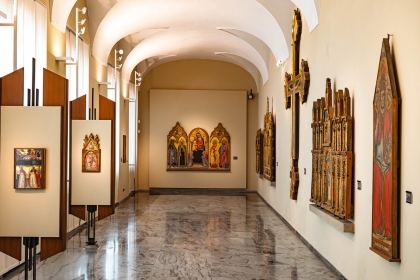
Organizing your visit to the Pinacoteca Nazionale di Bologna is quite simple, although it is always advisable to check the current opening hours on the official website before setting off. The museum is located in a central area of the city and is easily accessible. Please note that part of the collection, namely the Palazzo Pepoli Campogrande, is closed for renovation until spring 2026. Therefore, focus on the main building in Via Belle Arti. The art gallery is a place that takes time to fully appreciate; don't rush to see everything. Allow at least an hour or two to explore the rooms at your leisure and linger over the works that impress you most. Inside, the exhibition tour is designed to take you through the different eras of Emilian painting, but feel free to linger wherever you like. It is an experience that deserves to be savored at a leisurely pace, enjoying each room and each masterpiece.
Events and special activities
In addition to its permanent collection, the Pinacoteca Nazionale di Bologna regularly organizes special events and activities that enrich the visitor experience. These may include temporary exhibitions on specific artists or periods, lectures by art experts, or educational workshops for adults and children. Participating in these events offers a unique opportunity to learn more about the artistic heritage that has been preserved and to experience the museum in a more dynamic and interactive way. It is advisable to consult the events section on the museum's official website to stay up to date on the initiatives planned during your visit.
Essential works of the Pinacoteca Nazionale di Bologna
The Bolognese Trecento and the Primitives
Upon entering the Pinacoteca, you are immediately immersed in a distant era, the Bolognese Trecento. Here you can admire works that showcase the earliest forms of local art, with influences also stemming from the Byzantine tradition. These are paintings that, despite their age, retain a remarkable expressiveness. You can sense an art that is still deeply connected to spirituality, where colors and shapes begin to tell stories with new intensity. It is a fundamental starting point for understanding the development of painting in this region.
Raphael and the Emilia Renaissance
The journey continues into the Renaissance, a period of great splendor. The art gallery houses masterpieces that bear witness to the influence of great masters. Among them, one work of international renown stands out: Raphael Sanzio's “The Ecstasy of Saint Cecilia.” This painting is a true gem that conveys a sense of harmony and deep spirituality. Seeing a work of such high caliber up close is an experience that is not easily forgotten. You breathe in the air of a time when art reached its highest heights and influenced the entire Italian art scene. The presence of Raphael in Bologna is an important building block in the history of Emilian art.
The Masters of the 17th and 18th Centuries
Continuing the visit, you encounter the works of the masters of the 17th and 18th centuries. This period is characterized by different styles, from naturalism to baroque, with artists exploring new techniques and themes. You can admire canvases that show a great ability to represent reality, but also more elaborate and dramatic compositions. The collection offers an interesting insight into how Bolognese painting developed, dialoguing with the artistic trends of the time while preserving its own distinctive identity. It is a journey through centuries of creativity, with each room offering new discoveries.
The seat of Palazzo Pepoli Campogrande
The frescoed rooms of the 17th century
Palazzo Pepoli Campogrande is a place that immerses you in the past, especially when you are in its frescoed rooms. These rooms were decorated by truly significant artists of 17th-century Bologna. Remember that the Hall of Honor is dominated by Canuti's imposing “Apotheosis of Hercules,” a work that takes your breath away. Then there are the Rolli brothers' halls with more tranquil paintings and the halls dedicated to the seasons and Olympus. Here, Giuseppe Maria Crespi mixes solemn decoration with scenes of everyday life, a truly interesting approach. Not to be forgotten is Alexander's hall with its elegant classicism by Donato Creti. It is a true journey into the art and architecture of the time.
The Zambeccari painting collection
Ascending to the piano nobile of Palazzo Pepoli Campogrande, one encounters the Zambeccari painting collection. This collection, which Marquis Giacomo Zambeccari wished to make available to the public at the end of the 18th century, became part of the Pinacoteca's collections in 1884. Walking through these rooms, you can admire some of the paintings that make up this rich collection and are now an important part of the National Gallery's heritage. It is an opportunity to see up close works that have a long history and have been preserved for everyone to admire. The collection is a fundamental part of the exhibition tour and offers an insight into Bolognese painting of a particular period. If you are interested in such collections, it might be interesting to explore the history of the Zambeccari collection.
Frequently asked questions
When was the Pinacoteca Nazionale di Bologna founded?
The Pinacoteca Nazionale di Bologna began to take shape in 1762 when a gentleman named Giacomo Zambeccari purchased old paintings. The collection then grew rapidly, especially after the arrival of Napoleon's troops, who brought further works of art with them. Officially established as a gallery affiliated with the Accademia delle Belle Arti, it was founded in 1808.
What are the most important works to see?
There are countless masterpieces! Absolutely not to be missed are works by famous artists such as Raphael with his “Ecstasy of Saint Cecilia,” and then there are many paintings by Bolognese masters such as the Carracci, Guido Reni, and Domenichino. You start with the oldest paintings from the 14th century and go up to those from the 18th century.
Where is the Pinacoteca located?
The Pinacoteca has two locations. The main location is in a beautiful historic building, the former Jesuit novitiate, which also houses the Accademia delle Belle Arti. There is also a branch in the Palazzo Pepoli Campogrande, which is famous for its frescoed rooms.
What are the ‘Napoleonic works’?
During Napoleon's reign, many works of art were removed from churches and monasteries and collected in museums. The Pinacoteca di Bologna received many of these works, which became a very important part of its collection.
Is the Pinacoteca suitable for children?
Yes, there are often special activities for families and children. They are a fun way to discover the art and the stories behind the paintings, often with creative workshops or special guided tours.
Can I also visit the Palazzo Pepoli Campogrande?
The Palazzo Pepoli Campogrande is a truly special place with magnificently decorated halls. Unfortunately, it is currently closed (until spring 2026) for renovation work. I recommend checking the official website to find out when it will reopen and to check the opening hours of the main building.