
 FR
FR  ES
ES  DE
DE  IT
IT 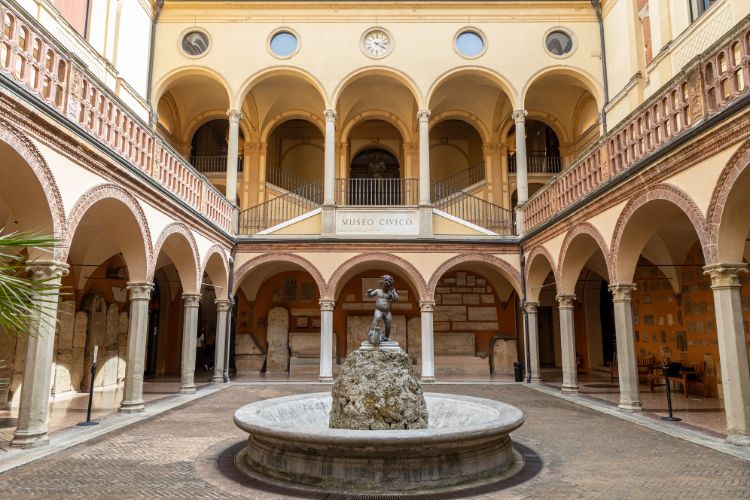
Bologna boasts a heritage of museums that cover a truly vast chronological and thematic range. It begins with the Civic Archaeological Museum, which takes us back through the centuries with artefacts telling the ancient history of the area, then moves on to the Civic Medieval Museum, where collections illustrate the life and art of medieval Bologna. We cannot forget the Civic Art Collections, housed in the magnificent Palazzo d'Accursio, which preserve paintings, sculptures, and decorative arts from the 13th to the 19th century.
Another gem is the Davia Bargellini Museum, with its precious collections of furniture and applied art objects. These museums are the beating heart of the city's history and culture, offering an in-depth look at the various eras that have shaped Bologna. Each of these spaces is an important piece in understanding the city's identity, from its foundation to more recent periods, with a particular focus on the local artistic and historical heritage.
Modern and Contemporary Art in Bologna
Bologna is not just about ancient history; it also boasts a vibrant scene for those who love more recent art. MAMbo, the Museum of Modern Art of Bologna, is the main point of reference. Housed in a former bread bakery, this space is dedicated to permanent collections and temporary exhibitions ranging from the post-World War II era to the present day. It is a place where you can feel the air of changing, evolving art. Near MAMbo, you will also find the Morandi Museum and Casa Morandi, a tribute to the great Bolognese artist Giorgio Morandi, with his collection and the spaces where he worked. It is an immersion into his creative world, an intimate experience. Then there is Villa delle Rose, which often hosts contemporary art installations and exhibitions, a different setting, more connected to nature and historical architecture. Let's not forget the Museum for the Memory of Ustica, a poignant place that, while dealing with a tragic event, does so through a language of art and memory, becoming an important point of reflection. Together, these spaces offer a comprehensive view of modern and contemporary art in the city, a journey worth exploring to understand the latest artistic trends and expressions.
University Museums of Bologna
The University of Bologna, one of the oldest in the world, holds a wealth of knowledge and artefacts that extend across several museums. These spaces, often less known to the general public but of enormous scientific and historical importance, are gathered under the umbrella of the University Museum System (SMA). Among these, the Museum of Palazzo Poggi stands out, housing historical collections related to university teaching, such as those of anatomy, physics, and chemistry, offering a fascinating glimpse into past scientific discoveries. Not far away, the Specola Museum, with its historic astronomical tower and collections of scientific instruments and zoological specimens, tells the story of celestial observation and the study of nature. These museums are not just repositories of objects, but true centres of research and teaching, which continue to thrive thanks to the university's activities. The University Museum System also includes a wide range of other collections, spanning geology, botany, anthropology, and zoology, making the university's offerings a veritable treasure for anyone wishing to delve deeper into the history of knowledge.
State Museums and Art Collections
National Art Gallery of Bologna
The National Art Gallery of Bologna is a truly important place for art lovers. It is located on Via Belle Arti and houses a collection ranging from the 13th to the 18th century. There are works by famous artists such as Giotto, Raphael, Titian, Guido Reni, and Guercino. The museum has also been recently renovated, with a new wing and reorganised rooms to better appreciate the masterpieces.
Palazzo Pepoli Campogrande
This palace, which now houses part of the Museum of the History of Bologna, is another must-see. It is an example of how history and art intertwine in Bologna. Here you can admire collections that tell the story of the city's life and traditions through the centuries, offering an in-depth look at Bologna's past.
Private and Thematic Museums
In addition to civic and state museums, Bologna boasts a number of private and thematic exhibition spaces that offer unique perspectives on culture and history. The Ducati Museum, for example, is a must for motor enthusiasts, telling the story of an iconic brand through its legendary motorcycles. For those interested in the city's history more broadly, the Museum of the History of Bologna offers a fascinating journey through the centuries. We cannot forget the Museum of Industrial Heritage, which highlights the ingenuity and innovation that characterised the region's industrial development, with exhibitions that often include interactive installations and direct testimonies of work. Finally, the International Museum and Library of Music celebrates Bologna's musical richness, a city with a long-standing musical tradition. These places, often less known but full of charm, complete Bologna's museum landscape, offering diverse and in-depth experiences for every type of visitor.
Frequently Asked Questions
How many museums are there in Bologna?
There are many museums in Bologna, over forty! There are all sorts: ancient, modern, dedicated to art, science, history, and even technology. There's plenty of choice for all tastes.
What is the most important museum in Bologna?
It's difficult to say which is the 'most' important museum, as each has something special. However, the National Art Gallery is certainly one of the most famous, with works of art dating from a very long time ago up to the 18th century. The MAMbo, dedicated to modern art, is also very well known.
Are there museums dedicated to engines in Bologna?
Absolutely yes! Bologna is in the heart of the 'Motor Valley', so museums dedicated to engines were bound to exist. The Ducati Museum is very famous for motorcycles, but there are also other museums related to cars and mechanics.
Are the university museums open to the public?
Yes, many museums of the University of Bologna are part of the University Museum System and are also open to those who do not study there. They are fantastic places to discover the history of science and research, with collections of ancient instruments, animals, and much more.
Where can I see ancient works of art in Bologna?
To see ancient works of art, you can visit the Civic Medieval Museum, located in a beautiful palace, or the Civic Art Collections in Palazzo d'Accursio. There is also the Davia Bargellini Museum and the National Art Gallery, which will take you back in time.
Are there museums dedicated to music in Bologna?
Of course! The International Museum and Library of Music is a wonderful place for music lovers. It houses ancient musical instruments and precious documents, and it is a fascinating journey into the history of music.